

A look into the Origins of Filet Crochet
From Fishing Nets to Lace to Crochet? The exact origins of filet crochet are a bit of a mystery but we're going to take a little dive and see what we can find.
B
11/7/20257 min read
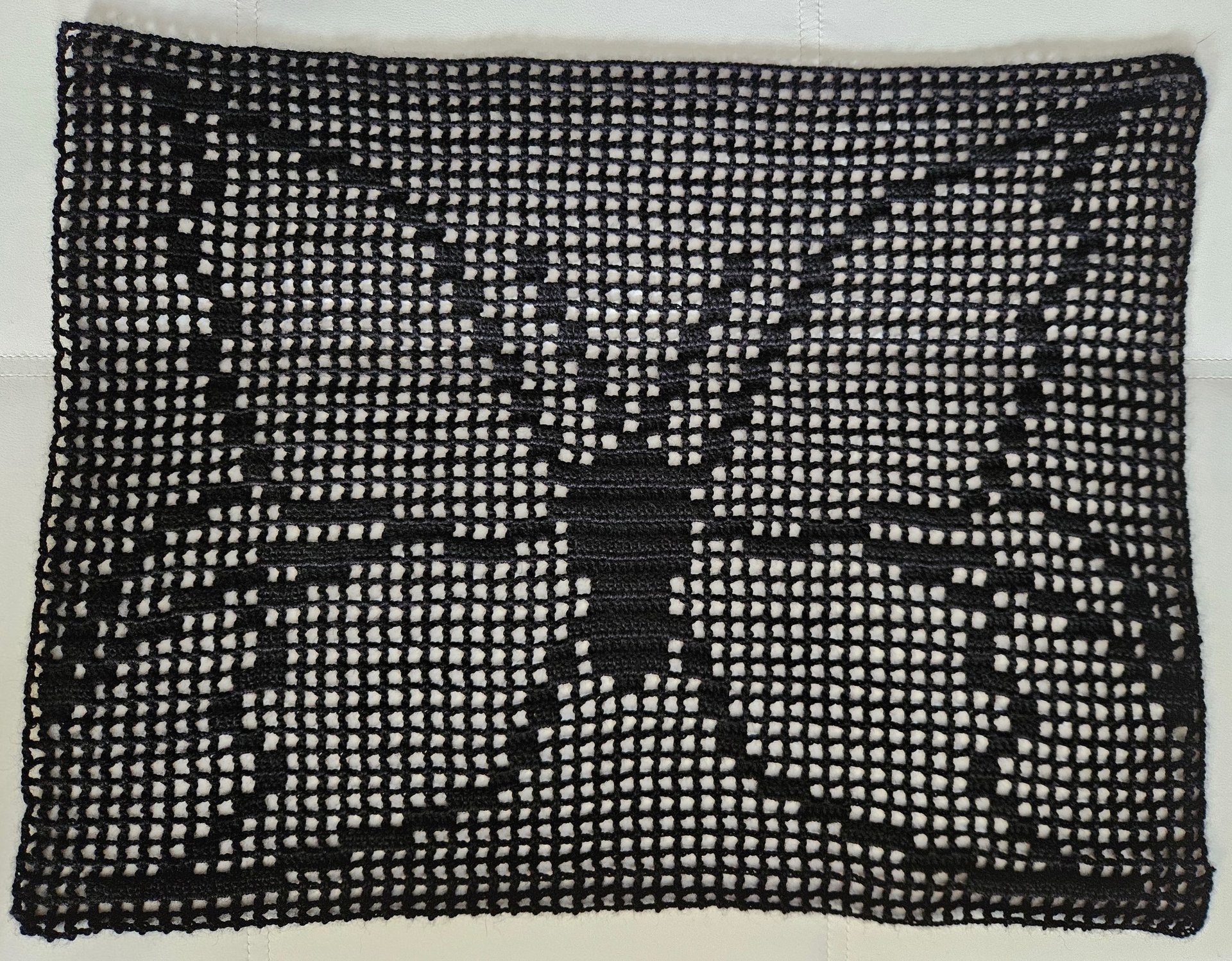
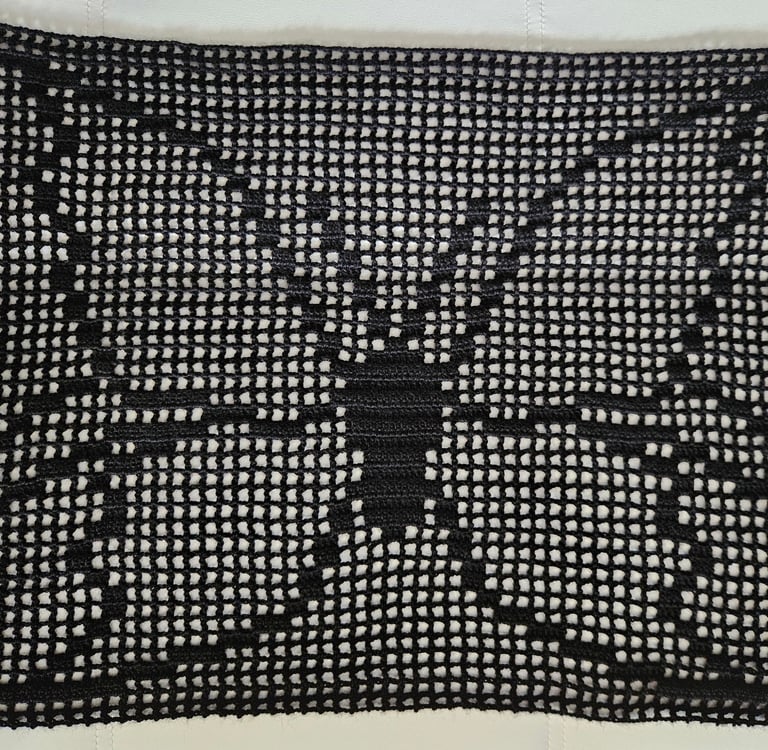
Like many times before the wanna-be archaeologist/anthropologist in me just can't resist looking into the history of some of my favorite things. My favorite thing at the moment being: filet crochet (the butterfly down below is one of my most recent creations).
If you have some curiousity into the subject, step back in time with me to Fourth Dynasty Egypt.
You're assisting with the burial of an Egpytian aristocrat and getting ready to seal them in their tomb for the next step, the afterlife. You've been assigned the task of watching after the beaded dress until it's time to place it on the mummy. Looking closely at the dress you see intricate beads of blues and copper tones placed in a net like pattern. It somewhat reminds you of a fishing net.
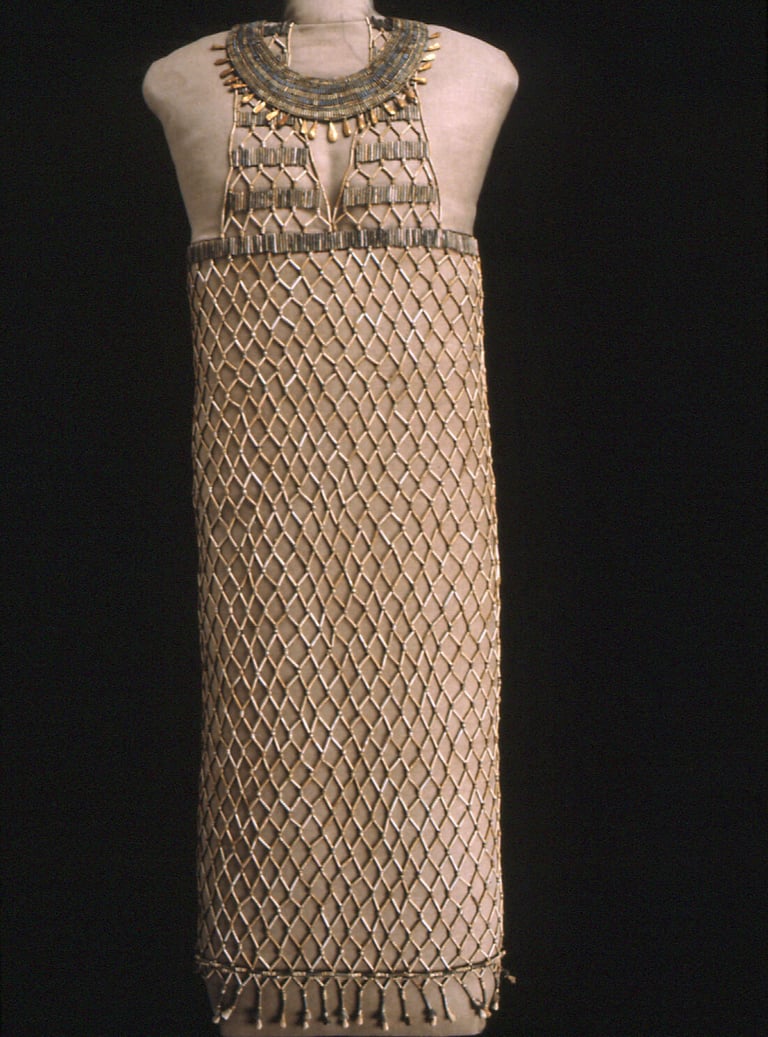
The dress pictured above is most likely what you would have been holding. In the picture above from the Giza Project at Harvard University we see a recreation that they did of it. It is one of the first inspirations from fishing nets being translated into textiles that we have good record of. The net pattern is unmistakable and very prominent with the original dress being dated to somewhere between 2551 BC to 2528 BC.
But why do we care?
Well, we know that filet crochet came about as an imitation of filet lace. Looking into the origins of filet lace, the prominent theory is that it was inspired by fishing nets. There are even some beliefs that the earliest forms of filet lace might have come from Egypt. Unfortunately, I wasn't able to find much solid information about this.
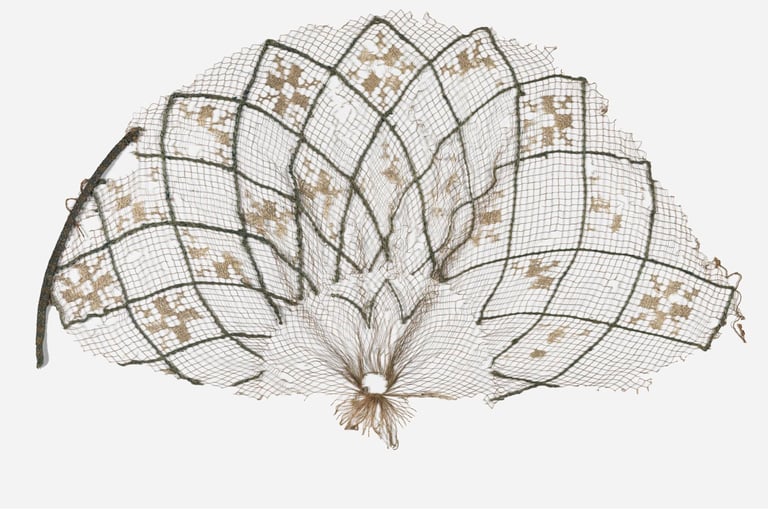
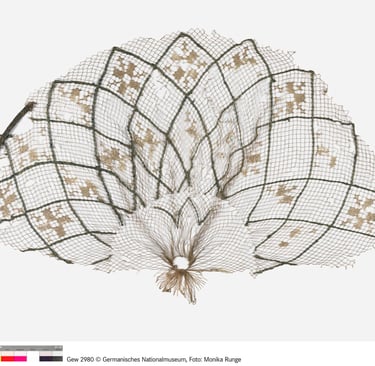
However, one of the most solid pieces of evidence of the first filet lace that we have comes from a Hessian grave. In the form of a 13th century hairnet.
(Photograph © Giza Project at Harvard University - http://giza.fas.harvard.edu/sites/2165/full/
picture curtesy of the germanisches national museum
Fragment einer Netzhaube, Haarnetz (Gew2980) | Objektkatalog
This is definitely not your everyday, sanitary purposes, hairnet. These intricate designs were made of silk and were worn mostly by Hessian female aristocrats. Due to aging and this being a cutting of the full piece we don’t see much of the original design but you can find a recreation and analysis on this piece in the following link 13th century hairnet from Marburg – Knots in a net.
I also found reference to another 13th century find in a book published back in 1880 called Lace: Ancient and Modern by Mrs. C D Beebe (bcd_lace). She found that there was a piece of spiderwork dated from the 13th century in the Bock Collection of the South Kensignton Museum in England. I was unable to find a record of this myself but she includes this picture in her findings.
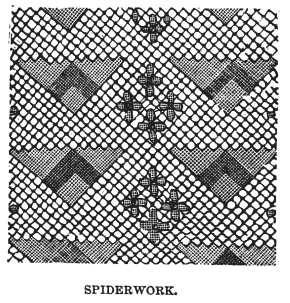
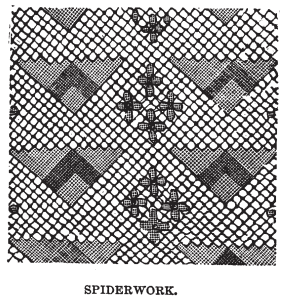
The terminology for lace work can be varied not just because of the various types of lace that exist but also the fact that techniques were being developed in different countries. Filet lace went by many names. The French called it filet, which was a term for net. And in it’s final form in Italy, it was called lacis. It has also been traced back to the 14th century when it was called Opus Araneum in medieval Latin, which translates to ‘Spider Work’. The term spider work seems to correlate with pieces that are finer and more elaborate in design than what was standard, like the one mentioned in Mrs. C D Beebe's book.
So while we might not know the exact time this type of lace came into existence it seems like the 13th century is a safe bet. I would dare say maybe even the 12th century because it can take some time for new techniques to get noticed and spread among the population, especially when you’re main source of information is word of mouth, local newspapers and whatever books or writings are around, if you knew how to read.
The trick with filet lace is that before you can start working on a pattern you first have to make the net or have it pre-made. You traditionally start with a square mesh net, originally silk but eventually replaced with linen, which is then filled in with a variety of stitches. If you’re making the net yourself you’re going to need tools like the shuttle and gauge stick to make and keep the squares even. Before kits consisting of those materials were made widely available the net was typically bought from lacemakers.
You can see the process for a smaller square piece in this picture from the Filet Museum of Villa La Magia. The most popular stithces are/were the linen stitch, darning stitch and running stitch.
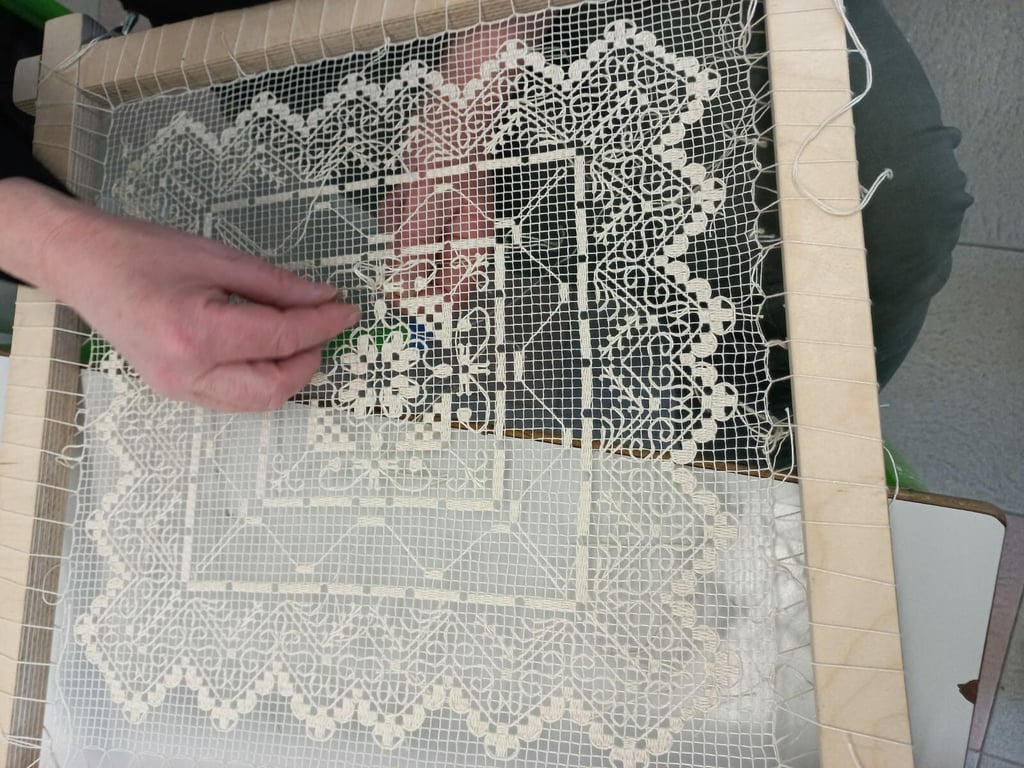
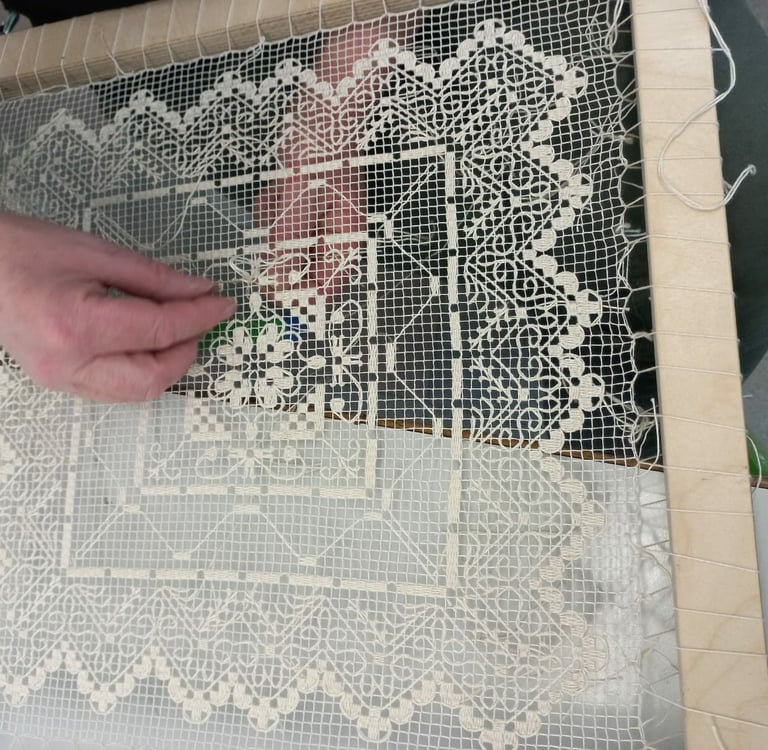
Naturally anything that has thousands of hours of manual labor behind it and is treasured by the aristocracy, church and royalty is going to come with a hefty price tag.
According to the Smithsonian in 1685 a cravat would cost four and a half times the annual salary of a servant. I was not able to find what the annual salary of a servant was in 1685 but it makes sense that it was mostly high society buying lace. Eventually, much like many things in the 19th century, lacemaking was automated with machinery and the introduction of cotton led it to become a little more affordable and was bought by the middle class.
These days you can go to a website called Filet Lace by the Sea (which is the cutest name and hints at the fishing net origination) and get a 9ft by 20 inch lace net for about $22. Much more manageable and for someone who wants to try their hand at filet lace a decent enough price.
Somewhere along the line in the 19th century someone took a look at filet lace and said, I bet you I can crochet that. As I’m sure we’ve all said at one point or another.
Despite looking through multiple websites, videos, and even some research papers, I was unable to find who said it.
We do have some references to from the 19th century, I was able to find a few resources showing filet crochet but it was a little difficult to track down initially because of it’s many different names. For example in her book My Crochet Sampler by Frances Lambert that was published in 1844, Miss Lambert uses the term open crochet. She also makes reference that this type of stitch is best used for purses.

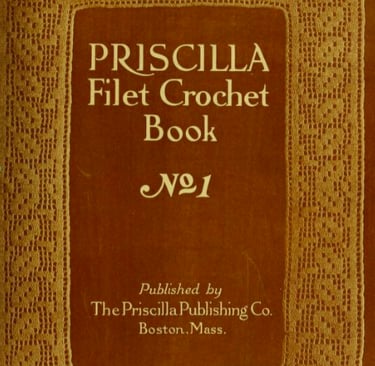
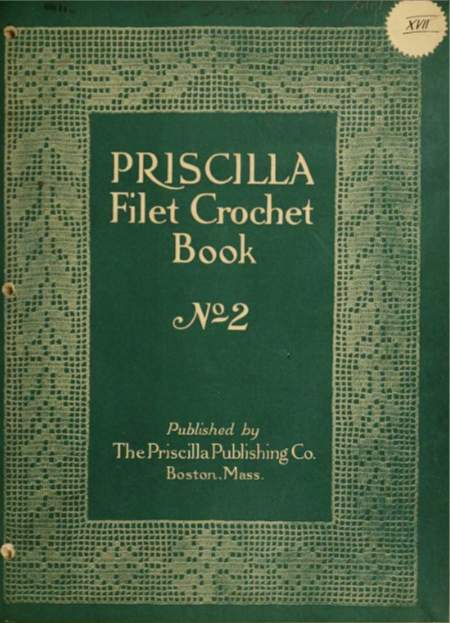
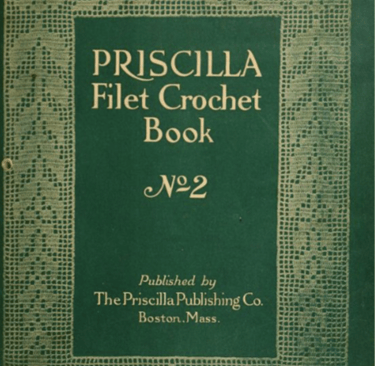
We also know that it continued to be popular into the 20th century.
The earliest publications I can find that explicitly state Filet Crochet are these two books published in 1914 by the The Priscilla Publishing Company called the Priscilla Filet Crochet Book No1 and No2. You can actually find copies of them archived with the Smithsonian. The Priscilla Publishing Company, later known as Modern Priscilla, was a popular magazine that ran from 1887 until 1930. They were widely known for their crafting patterns that ranged from knitting to needlework to crochet among other home related topics.
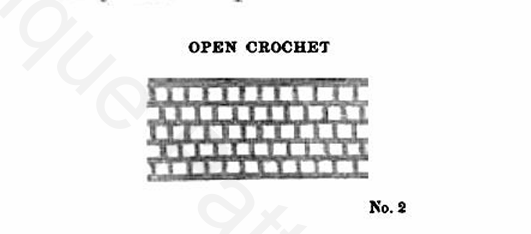
We can also see filet crochet being used in combination with other stitches to make pieces more dynamic and to make use of negative space. Miss Marie Louise Kerzman in her book Miscellaneous Designs for Crochet Work, published in 1883, shows us the use of netted crochet to make a border and create some negative space in a doily.


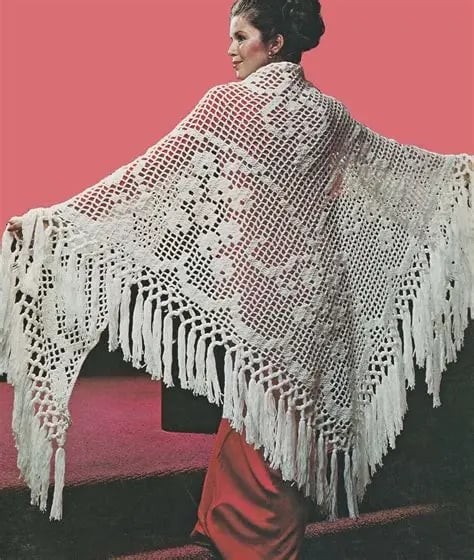
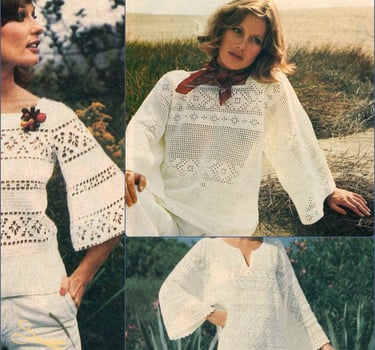
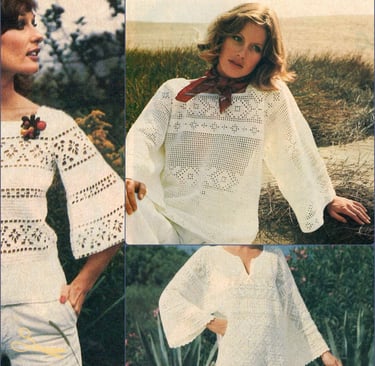
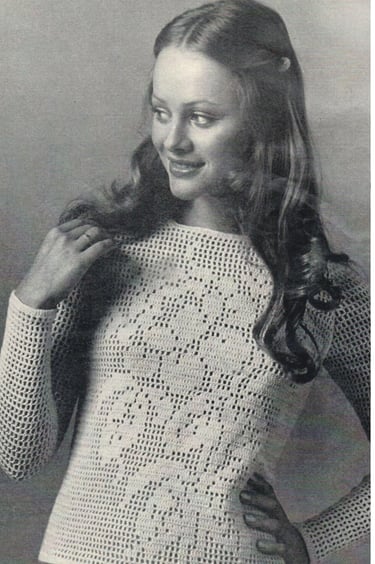
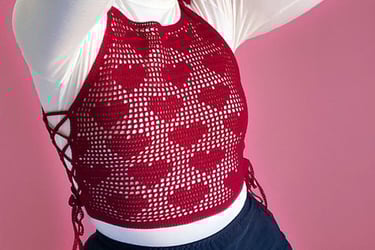
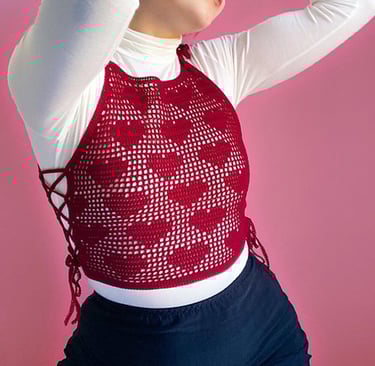
It continued to remain popular throughout the 1900s where it was used for doilies, decorative curtians, tableclothes. Even showing up in apparel eventually like baby blankets, tops, and dresses, particularly in the 70s. We see the emergence of a lot of shirts, beach cover-ups, shawls, and dresses for women.
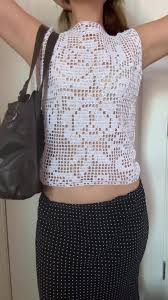
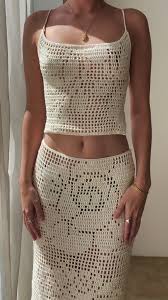
Even more recently there’s been a lot of interest in filet crochet with the flower top making its rounds and a lot people trying out vintage patterns. The rose top seems to be all the rage with influencers all over trying out the pattern and putting their own Y2K spin on it.
While filet crochet might be an imitation of lace I think it’s versatility makes it a great craft to have in your toolkit. I also personally find a lot of beauty in artwork made of lines, it’s how I’ve always drawn and at some point I got tired of being asked why my works weren’t complete so I kind of gave up on drawing. Finding filet crochet made me realize that not liking the way shading looked didn’t make my drawings any less complete than others. So if you’re feeling adventurous consider giving filet crochet a go or even making your own patterns. It’s much easier than you might think but certainly no less rewarding.
-B

Don't feel like reading? You can check out this YT video